

Water Market Insights
How do Australian water markets work?
Australia’s water markets allow water to move to its highest and best use. Trade is facilitated through open and transparent markets, enabling market participants to buy, sell or lease water as conditions change. This helps direct supply to the regions and crops that value it most, improving efficiency across the system.
Prices for entitlements and allocations reflect factors such as rainfall, storage levels, delivery constraints and demand from different industries. In Australia, water entitlements are traded separately from land, resulting in irrigators having the flexibility to adjust their water strategy to manage cost, risk and production throughout the year.
Water Entitlements
Water entitlements are perpetual rights to a share of water in a river system. They provide long term access and form the foundation of water security for many irrigators. Entitlements support planning, investment decisions and the ongoing needs of permanent and annual cropping systems.
Water Allocations
Water allocations represent the annual volume of water made available to entitlement holders. Allocation levels change each year based on rainfall, inflows and storage conditions. This gives irrigators access to water when and where it is needed, but also reflects seasonal variability.
High vs General Security
High security entitlements receive more reliable annual allocations, including in dry years. General security entitlements are more variable and typically receive water in average-wetter conditions. The mix of these products influences reliability, cost and risk across irrigation operations.
Unbundled System
In an unbundled water system, water rights are separated from land. This allows market participants to buy, sell, lease or carry over water independently of property ownership. Unbundling provides flexibility to adjust water positions as seasons, crops and business needs change.
The Murray-Darling Basin
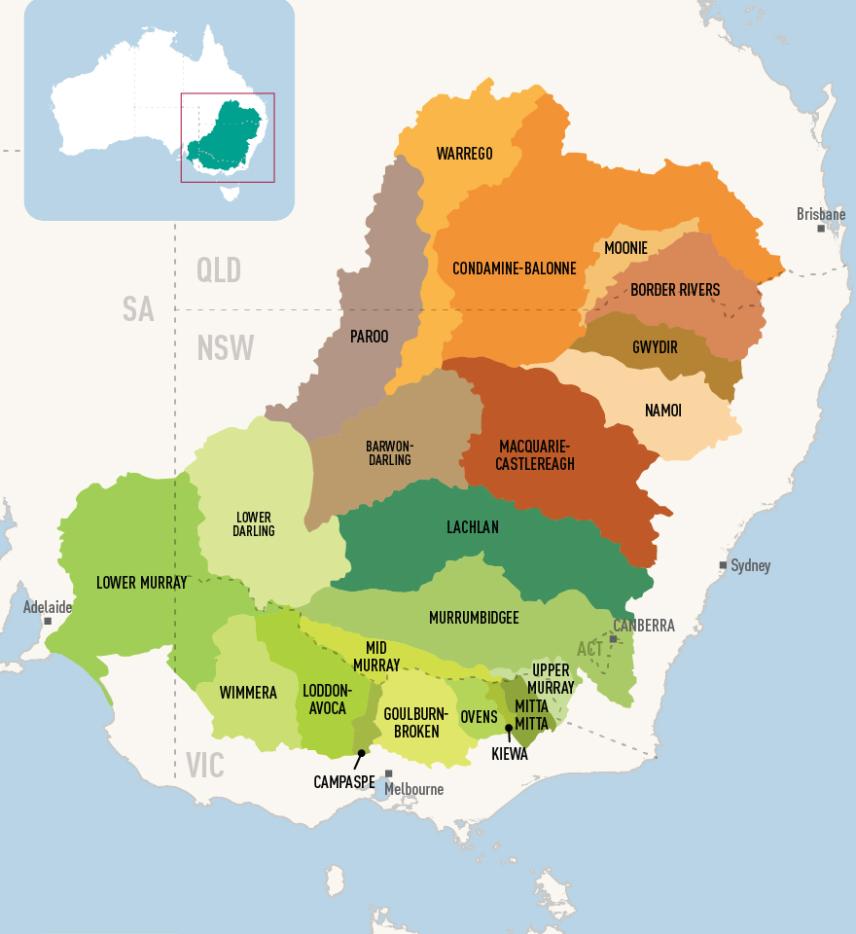
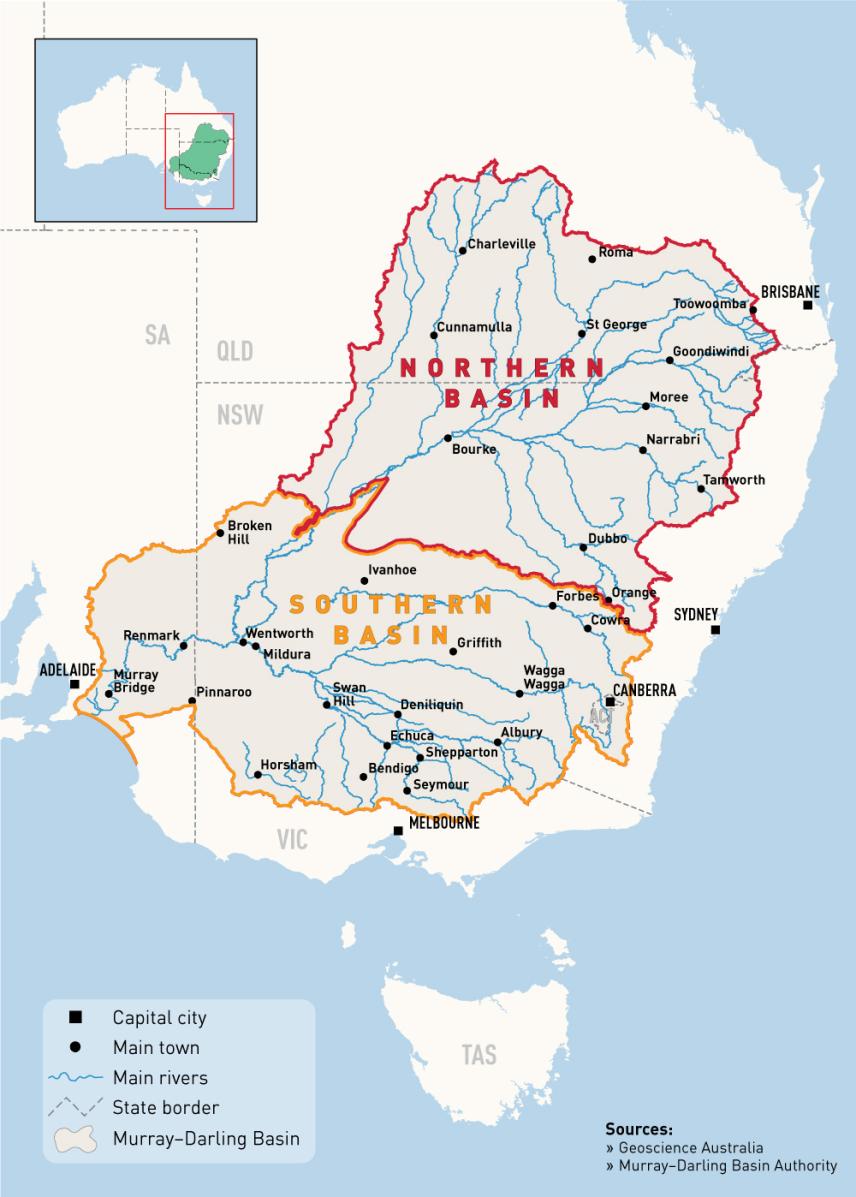
Australia is home to one of the most sophisticated water markets in the world, the Murray-Darling Basin. Home to approximately 40% of Australia’s farms, its rivers, storages and irrigation districts form an interconnected system where water can move between regions under clearly defined rules.
A Market Designed for Movement
The Murray-Darling Basin’s water markets allow water to move to where it creates the most value. Rules-based trade facilitates movement of water across zones and catchments, helping irrigators respond to changing conditions and seasonal variability. By enabling water to shift to its highest and best use, these markets improve efficiency across while still supporting town supply and environmental outcomes.
What Drives Pricing?
Water pricing reflects both long-term fundamentals and short-term seasonal conditions. Entitlement prices are shaped by reliability, supply scarcity, regional demand, and the industries that depend on them. Allocation prices fluctuate more dynamically and respond to rainfall, storage levels, inflows, operational constraints and active trading between regions. Because water moves through an open market, prices adjust as irrigators buy, sell or transfer water to match their production needs.
Supply side drivers
Water availability in the Murray–Darling Basin is shaped by several key factors. Major storages such as Hume, Dartmouth, Burrinjuck, Blowering, and Eildon capture and release water throughout the year, acting as critical buffers for irrigators, communities, and the environment. Seasonal conditions and climate patterns also play a major role, with dry years and El Niño events typically reducing inflows, and wetter periods and La Nina events typically improving available supply.
Government policy has also had a lasting impact. Successive buyback programs mean the Commonwealth now owns roughly one quarter of all entitlements on issue. A significant share of available water is therefore directed toward environmental objectives rather than agricultural production, reducing consumptive supply and influencing long-term allocation outcomes and pricing across the Basin.
Demand side drivers
Water demand in the Basin reflects the needs of a diverse set of users. One of the most significant trends over the past decade has been the shift from annual cropping toward permanent plantings such as almonds, citrus, nuts, and grapes. These industries require reliable annual water supply regardless of seasonal conditions, increasing the structural demand for water and reducing overall elasticity. This transition has been a major factor supporting long-term increases in entitlement values.
Annual crops such as cotton, rice, and cereals still play an important role, adjusting their footprint based on seasonal conditions, water availability, and price.
Who owns Australia’s water entitlements?
Water entitlements in the Murray-Darling Basin are owned by three major groups. Irrigators hold the majority of entitlements on issue (~70%), the government owns a substantial portion to meet environmental objectives (~25%), and investors hold a smaller share that supports trading activity and market depth (~5%).
The Role of Investors
Investors play an important role in supporting the efficiency and stability of Australia’s water markets. By providing capital to purchase, hold and actively manage entitlements, investors help irrigators access water without needing to tie up large amounts of capital in permanent assets. This creates more flexible supply, deeper markets and greater liquidity across seasons. Importantly, 100% of the water held by investors flows back to irrigators each year through leases, allocation trades and other supply arrangements, ensuring the market remains firmly anchored to agricultural production.
Regulatory Environment
Water management in the Murray-Darling Basin is guided by a robust set of federal and state rules. These regulations determine how much water is allocated each year, how trades are processed, and how river operations are managed. The Murray–Darling Basin Authority oversees the Basin Plan and system operations, while the ACCC monitors market conduct and transparency. Clear and consistent regulation helps maintain confidence in the market, ensuring irrigators can plan and invest with certainty while protecting long-term river health.